7/06/2023

BEST BOOKS BEST : SIX SET


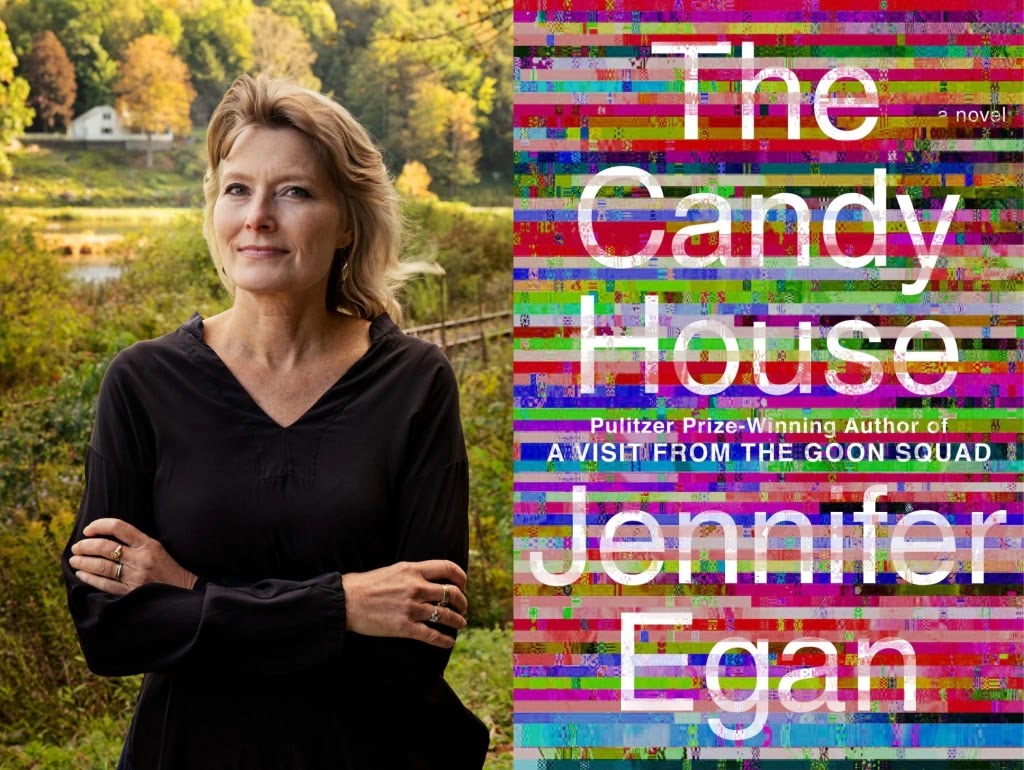
1.- The Candy House by Jennifer Egan.

Egan's 2010 novel A Visit From the Goon Squad hooked readers with its imagination and intellect and won a Pulitzer Prize.

Now, more than a decade later, many of its characters return in The Candy House, which centers on a new Technology, '' Own Your Unconscious, '' that allows people to save and share all their memories.

2.- Of Blood And Sweat by Clyde W. Ford.

Black Americans have long helped white people get  - and stay - wealthy, but instead of their fair share, they have received brutality in return.

That's the central argument that Ford, a psychotherapist and the author of Think Black, makes in this deeply researched book.

He illustrates the many ways Black labor has been essential to agriculture, politics, medicine, law enforcement, and more, and makes clear that reparations are still due.

3.- Let's Not Do That Again by Grant Ginder.

Nancy Harrison is running for Senate, and her biggest obstacles are the adult children. Greta and Nick.

Greta is making headlines for hurling a champagne bottle through a Paris restaurant window during a political riot.

Nick, who's floundering in his own way while writing a musical based on the works of Joan Didion, accompanies his mother to France to bring Greta home and save the campaign.

4.- The Trouble With Happiness by Tove Ditlevsen, translated by Michael Favala Goldman.

Danish writer Ditlevsen died in 1976, but her legacy endures with this collection of short stories.

As its title suggests, this isn't a happy read; it focuses mostly on relationship turmoil. The stories are unsettling but beautifully crafted.

5.- Forbidden City by Vanessa Hua

In 1960s China, during the violent Cultural Revolution, a fictional teen named Mei is recruited by the Communist Party and drawn into the inner life of the chairman leading the upheaval, becoming his confidant and romantic partner.

But when Mei is assigned an important mission, she grows disillusioned, and must make wrenching decisions.

6.- I'LL Show Myself Out by Jessi Klein

Klein delivers a welcome laugh for parents just beginning to emerge from the dumpster fire otherwise known as pandemic parenting.

In her second essay collection, the Inside Amy Schumer writer grapples with the humiliations and possibilities of midlife and motherhood.

The World Students Society thanks Time Magazine.

Headline, July 07 2022/ ''' '' INTERNET ARCHIVES INTEGERS '' '''


''' '' INTERNET ARCHIVES 

INTEGERS '' '''


SIGNATURE SINGAPORE : OVER THE LAST MANY, - MANY WEEKS, the readers / students of  Singapore have led the ' viewership global stats ' on Samdailytimes. They have led by thousands.

The World Students Society - for every subject in the world, is the exclusive ownership of every student of Singapore, just as it is the eternal ownership of every student in the world. Welcome All and Each, to !WOW!.

EVERY TECHNOLOGICAL revolution entails a loss. Socrates warned in Plato's '' Phaedrus '' that the invention of writing destroyed memory, making people ''hearers of many things'' who ''will have learned nothing.''

More recently, the typewriter enabled production of far more paperwork, raising profound anxieties  about the number of lost, displaced and missing documents.  

Today's digital societies echo these historic patterns of loss, neglect and entropy. But new actors and dynamics have also entered the stage. Public spheres now exist precariously at the mercy of social media companies.

And each day, corporations like Amazon, Alphabet and Meta extract and assetize our data, stockpiling it and monetizing it under dubious consent structures.

The fact that crucial decisions about whether to keep or destroy data are kept in the hands of actors with profit motives, autocratic aspirations or other self-serving ends has a huge implication not only for individuals but also for the culture at large.

Many instances of data loss have ramifications for cultural production, the writing of history and, ultimately, the practice of democracy.

THE WORLD'S DIGITAL MEMORY IS AT RISK. INTERNET archives hold humanity's collective memory. We must prioritize their preservation.

A constant hum drones out of a former church in San Francisco. It is the sound, from hundreds of fans cooling hundreds of computer servers, of the digital past being kept alive. This is the Internet Archive, the largest collection of archived web pages in the world and a constant reminder of the fragility of our digital past.

It is also, thanks to a March ruling in a U.S.federal court, which found that the archive's leading practices violate publishers' rights, just one battlefield in a growing struggle that will define how humanity's collective digital memory is owned, shared and preserved - or lost forever.

AS A SCHOLAR OF Digital Data, I know that not all data loss - the corrosion and destruction of our digital past - is tragic. But much data loss today occurs in ways that are deeply unjust and that have monumental implications for both culture and politics.

Few nonprofit organizations or publicly backed digital libraries are able to operate at the scale needed to truly democratize control of digital knowledge. Which means important decisions about how these issues play out are left to powerful, profit driven corporations or political leaders with agendas.

Understanding these forces is a critical step toward managing, mitigating and ultimately controlling data loss, and with it, the conditions under which our societies remember and forget.

From streaming platforms removing digital-only shows from their libraries to governments defunding their national library systems to the effects of tech centralization, data is disappearing at alarming rates.

BREWSTER KAHLE, Internet Archive's founder, told me that thanks to government pressure or simply error, data is often subject to large-scale erasure. For webpages that have been wiped clean, the Internet Archive is often the only place to look.

Traditional publshers brought the suit against the archive because of its practice of lending, for short periods, scans of their books [including, to authors' dislike, recently published titles].

The court ruled that the archive must stop lending copyright books. An appeal is in the works, but if the court ruling is upheld, it could seriously undermine the ability of the archive and similar bodies to defend public access to information against the encroachment of privately held platforms, according to Mr. Kable.

To sum up, Museums, Libraries and other institutions must play a more proactive role.

The Honour and Serving of the Latest Global Operational Research on Data, Internet and Archiving, continues. The World Students Society thanks author Nanna Bonde Thyistrup for her Opinion.

With respectful dedication to the Global Founder Framers of The World Students Society, and then Students, Professors and Teachers of the world. See You all prepare for Great Global Elections on !WOW! : wssciw.blogspot.com and Twitter !E-WOW! - The Ecosystem 2011 :

Good Night and God Bless

SAM Daily Times - the Voice of the Voiceless

TECH GEMS TENS : FOUR STARS


1.-  Sotheby's : Auctioning digital gems

The 278-year-old auction house sold a record $7.3 billion worth of art in 2021, thanks in part to its willingness to plunge into the hot nonfungible token [NFT] business.

Most of Sotheby's sales still involve more familiar form of art, like works by Botticelli or Banksy, but $100 million in NFTs were sold at Sotheby's auctions last year, from cartoon monkeys known as Bored Apes to the source code of the World Wide Web.

While Christie's and other auction houses also showed interest in this new tech, Sotheby's became the first major auction house to open a virtual gallery in the metaverse, helping it stand out from rivals as technological revolution upends centuries-old norms of bidding and selling. [ Andrew R. Chow ]

2.-  Sony : Entertaining The World

If there was ever any doubt that Sony is a global entertainment behemoth, the past many months have erased it.

Spider Man : No Way Home, a joint Sony Pictures-Disney mash up that came out in December, featuring three different Spider-Men from three different universes, grossed $1.9 billion worldwide and had the second biggest U.S. opening weekend ever.

Meanwhile, supply-chain issues means the company's gaming can't make enough Playstation 5 consoles to meet the huge global demand, but analysts still expect sales to handily outstrip those of chief rival Xbox. [ Eliana Dockterman ].

3.-  Reddit : R / GOINGPUBLIC

Once freewheeling ''internet homepage'' Reddit has grown up, with 100,000 active communities serving 50 million daily visitors.

'' People come to Reddit with intention and find spaces for camaraderie and conversations that can spark change that extends beyond the online and into real life,'' says CEO Steve Hufffman.

Reddit, which also served as the catalyst for last year's ''meme stock'' investment craze, now hopes to cash in - last valued at $10 billion, it filed to go public this year even as it struggles to fight hate speech. [ A.R.C. ]

4.-  Revolut : Refugee Accounts

Revolut - Britain biggest financial technology startup, worth $33 billion - has captured global attention, amid Russia's war in Ukraine by allowing refugees from the region to sign up for accounts without the usual documentation, like proof of European citizenship.

'' We felt it was imperative to help those most affected by providing a service that gives them easy, quick access to their money,'' says co-founder and CTO Vlad Yatsenko, whose company offers money transfers, prepaid cards, and currency swaps.

While drawing widespread praise, the gesture has failed to paper over high staff turnover amid accusations of cutthroat corporate culture, not to mention a balance sheet that remains firmly in the red.  [ Charlie Campbell ].